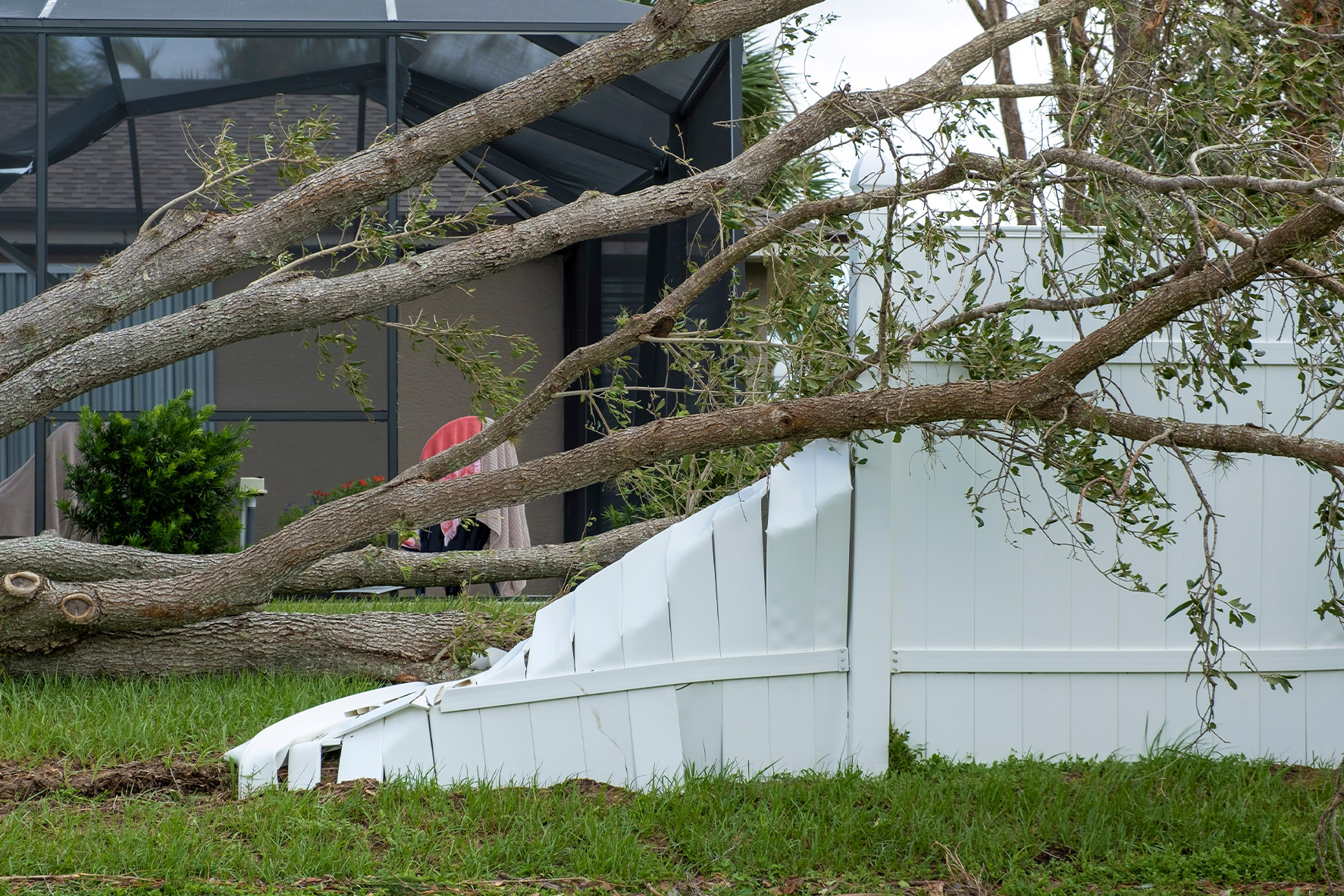
When hurricane season arrives, homeowners typically prioritize roofs, windows, and trees. However, fences often serve as a property’s initial defense and frequently become casualties of high winds. Compromised fencing creates safety concerns, enables pet escapes, and results in substantial post-storm expenses.
Hurricane Season Prep: How to Reinforce Your Fence
Effective hurricane preparation involves strengthening existing structures, making strategic enhancements, and recognizing when professional installation expertise becomes necessary.
1. Start with a Storm-Ready Fence Inspection
Conduct a thorough examination along your fence line, noting these vulnerability indicators:
- Leaning or wobbly posts: Movement when pressed indicates structural compromise
- Rotten or cracked wood: Deterioration particularly at post bases and along rails
- Rusting or loose hardware: Corroded or backing-out screws, nails, brackets, and hinges
- Warped or broken boards/panels: These catch wind like sails, stressing the entire structure
- Sagging gates: Misalignment or undermounting issues
Professional assessment helps determine whether reinforcement, repair, or replacement represents the optimal solution.
2. Reinforce Fence Posts: Your First Line of Defense
Posts typically fail first during hurricanes. Properly reinforced posts dramatically enhance structural resilience.
Key Reinforcement Approaches
- Check foundation depth: Posts should be set in concrete at least one-third of their above-ground height deep (often 24–36 inches)
- Repair or replace loose posts: Add concrete footings, compact gravel-concrete mix backfill, or replace rotted wood posts showing soft spots
- Add temporary bracing: For imminent storms, brace vulnerable posts with angled 2x4s staked into ground, focusing on corners and gate posts
Multiple failing posts suggest the fence has reached end-of-life and warrants comprehensive replacement designed for wind load resistance.
3. Strengthen Rails, Panels, and Hardware
Tighten and Upgrade Hardware
- Replace rusted nails with exterior-grade or coated structural screws
- Upgrade weak brackets, hinges, and latches with heavy-duty, corrosion-resistant alternatives
- Ensure rails connect firmly to posts using proper structural fasteners rather than nails
Improve Structural Connections
- Add additional rails to tall wood or vinyl fences to reduce flex
- Verify each picket in privacy fences has proper, complete fastening
- Consider metal brackets or mending plates at critical joints to minimize movement under load
4. Manage Wind Flow: Design Choices That Matter
Solid privacy fences function as sails during hurricane-force winds. Designs permitting airflow perform more effectively.
Higher-Performing Fence Styles
- Shadowbox or board-on-board designs: Staggered boards maintain privacy while allowing airflow
- Picket or spaced-rail fences: Reduced wind resistance suits storm-prone areas
- Metal or aluminum fences: Open designs with durable posts and rails withstand high winds effectively
5. Material Upgrades for Hurricane Fence Prep
- Replace rotted wood posts with steel or heavier treated alternatives
- Use concrete for corner, end, and gate posts in hurricane zones
- Upgrade to high-quality fasteners and hardware (stainless steel or hot-dip galvanized)
- Address aging wood proactively—in many cases it becomes more cost-effective to repair or replace sections of a wood fence rather than risk escalating damage once severe weather hits
6. Don’t Forget the Gate: A Common Failure Point
Gates experience greater stress than any fence section. During hurricanes, weak gates can blow open, twist, and dislodge surrounding posts.
Storm-Proof Your Gate
- Install heavy-duty hinges appropriately rated for gate size and weight
- Use robust latches with full engagement capability, ideally lockable or pinned
- Add diagonal bracing preventing sagging and racking
- Ensure the gate frame remains square and aligned
7. Routine Maintenance: Your Best Long-Term Storm Strategy
- Clear debris and vegetation that can catch wind
- Clean and seal wood to extend fence lifespan
- Check fasteners annually and tighten loose components
- Document pre-storm conditions photographically for potential warranty or insurance support
8. When to Call the Pros for Hurricane Fence Prep
Professional contractors ensure posts reach correct depths and spacing requirements, materials and hardware suit local wind and soil conditions, installation complies with codes and safety standards, and job sites remain clean with minimal disruptions.
Conclusion
Fence failure during hurricanes creates more than replacement expenses — it generates safety hazards and post-storm complications. Inspecting, reinforcing, and upgrading fences now represents one of the most effective preparedness measures homeowners can implement.
Quality materials, thoughtful design, and professional installation ensure fences withstand whatever conditions the hurricane season delivers.